
Swagger without structure
In 2016, with the Splash Brothers mid-dynasty and a 73-win season underway, Golden State Warriors owner Joe Lacob told the New York Times Magazine his team was "light-years ahead of probably every other team in structure, in planning, in how we're going to go about things."
The line became a punchline around the league, especially after the Warriors collapsed and blew a 3–1 lead in the Finals that June. But people forget the other half of the story. Lacob's arrogance sat on top of real structure, on unpopular bets that paid off later, on bringing in outside expertise. He brought venture-capital principles and discipline and the analytics revolution to a franchise before most of the league caught on, and it worked.
I just got back from the Music Cities Conference in Calgary, where I led a roundtable discussion and talked with music operators and leaders from all over the world. So allow me my own pompous declaration: when it comes to music policy, California and the Bay Area are light-years behind the rest of the country.
I've spent over 20 years in the Bay Area music scene as a musician and live sound engineer, and more than 13 years in music hub operations - rehearsal studios, venues, artist development, and a hostel full of musicians and music lovers. I am constantly blown away at how much incredible and creative music is put out here locally and independently. I know how much this region has given and continues to give the music world. We have the laurels, we have the ingredients, we have the firepower. We don't have the structure, the planning, or the momentum, and we are barely even having the conversation.
Music Cities Conference - Calgary
The Music Cities conference is put on by Sound Diplomacy, a global thought leader and renowned consultant to governments around the world about music policy. I've greatly admired them since the first event I attended, the Memphis edition of the conference in 2017. It was immersive, eye opening, and life changing. I had no idea it was possible to think this intentionally or creatively about music intersecting with policy, infrastructure and tourism, or that this was even a 'thing', or the importance of music that could be backed up by real numbers. It was incredibly reassuring at the time to know that this movement was building. It confirmed the efforts I was a part of in making Music City San Francisco come to fruition, and it renewed our vigor. It led to helpful allies across the country, working models and ideas to bring back home for our project to build this music hub.
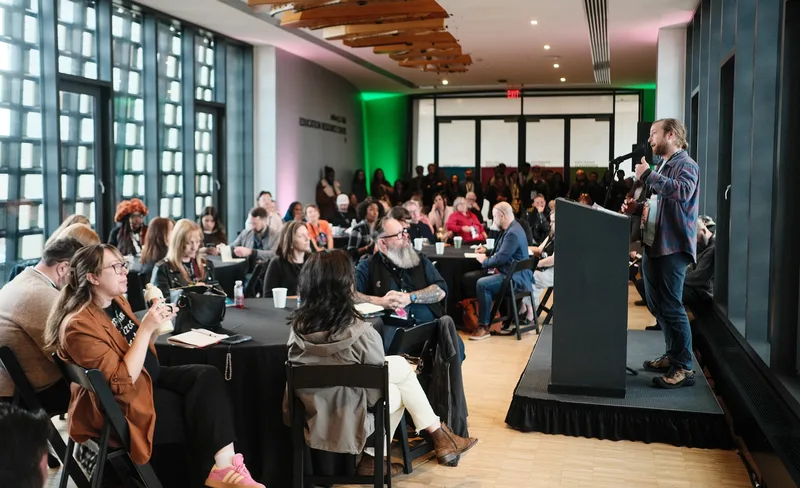
It was no different at this Calgary edition nearly 10 years later, where I listened intently through two days of presentations, panel discussions, fireside chats, and hallway conversations - furiously scribbling down notes. Elizabeth Cawein of Music Export Memphis described a 'music middle class' of artists who just want a decent living without moving to a bigger city. Andrea Khoo from the National Arts Council of Singapore found people only warmed to local music once it played in supermarkets and train stations, which made me think of the Civic Center BART plaza piping in music that isn't local. Steve Sleswick of The Tivoli Group, who own and operate venues in Brisbane, spoke of venues as a public good, essential infrastructure that must be protected. He described the city tearing down its venues in the '70s and '80s and losing a generation of artists to Melbourne, which is now regarded as a world music capital. These conferences are the kinds of places where an unexpected lunch conversation turns into something that just wows you. Like when Cory Crossman, Director of the London (Ontario) Music Office mentioned efforts to get rehearsal spaces subsidized by government, pointing out how city governments subsidize field rentals for sports. It framed things in such a natural, reassuring way that you just go "ohhhhh, yeah!", music IS deserving.
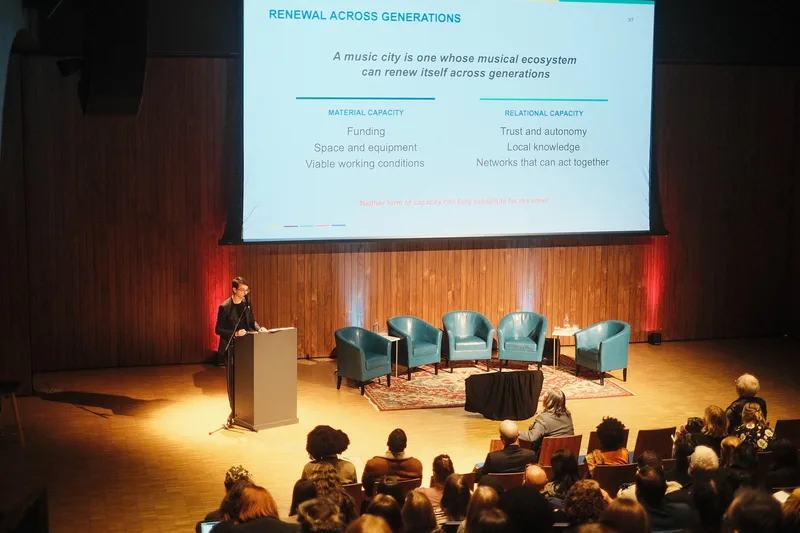
Across the talks and conversations, the same lessons kept surfacing, whatever the city. Music wins policy fights when it shows up with numbers, not just moral support: nearly every success story on stage, from Memphis to Huntsville to Boise, had an economic impact study behind it. The smartest advocates speak the language of whoever they’re pitching, framing music as a solution to problems officials already care about, like tourism, public health, downtown vibrancy, and civic pride. Good intentions need teeth, in the form of real policy, spending targets, and protections. And the work moves fastest when coalitions outside City Hall team up with a champion inside it.
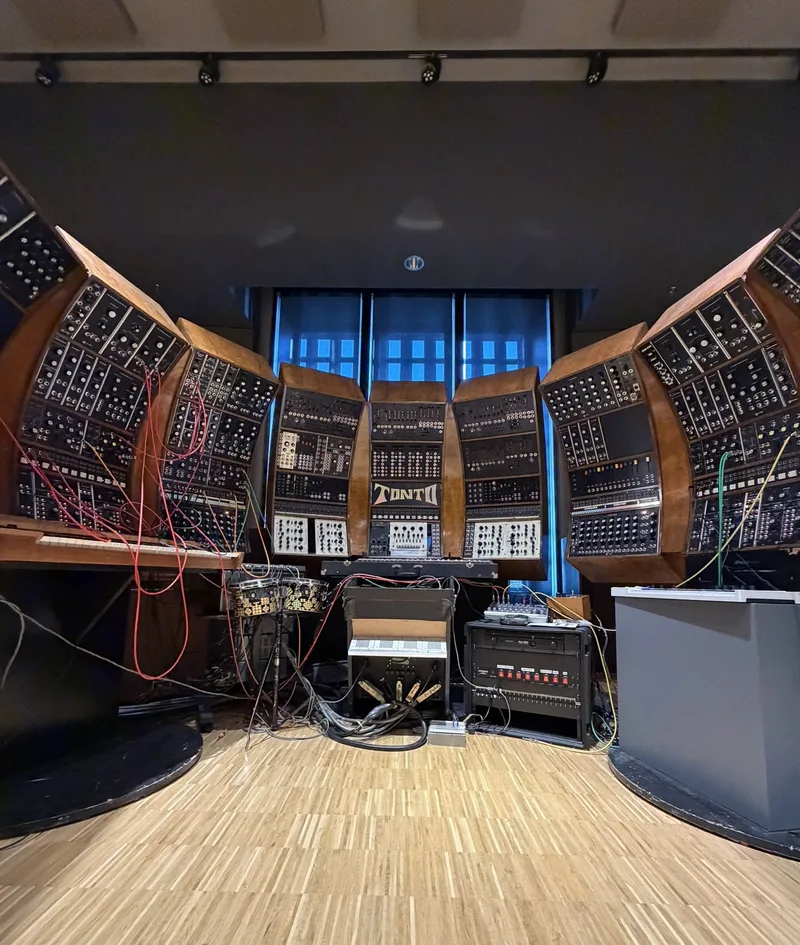
To top it off, the conference took place in the National Music Centre of Canada, with private tours of its Halls of Fame and recording studios, and I was turned onto the incredible music of indigenous artist Jeremy Dutcher, who spoke at the conference and performed that evening. I took pages and pages of notes, and I came away inspired.
What everyone else is building
A music office is simple to describe. It's a permanent desk, typically embedded in government, whose job is to grow the music economy, not just police it. It counts what music contributes, fixes what holds it back, and speaks for it inside City Hall or the statehouse.
Around the country, those offices are delivering:
- Texas has had a state Music Office since 1990, and its Music Friendly Texas network now links 100 cities sharing resources and visibility. Its Music Incubator Rebate gives qualifying venues up to $100,000 a year back on alcohol taxes, and it has been credited with keeping doors open through debt, code repairs, and back rent.
- Philadelphia's nighttime mayor funded artist pay for weeknight shows, so venues could book music all week and enliven commercial corridors beyond Friday and Saturday.
- Austin offers $5 downtown parking to music workers playing a gig.
- Tulsa gives local musicians microgrants of $250 to $1,000 for gas, lodging, and other tour costs, turning them into ambassadors for the city.
- Kentucky created a Governor's Office of Music by executive order in September, with NIVA's help. It is only the second state office of its kind.
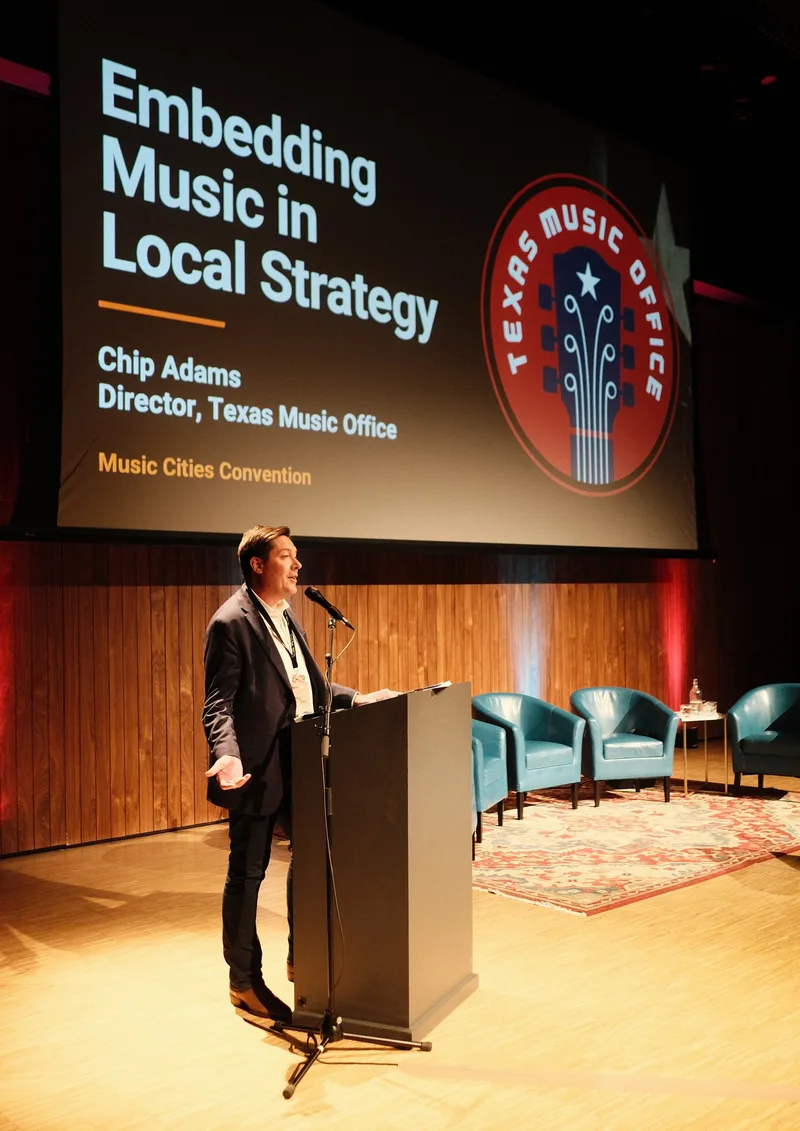
And that is just a sprinkling. The movement is now big enough that the American Association of Music Offices was announced in Calgary, a national network for the people running these offices to share what works. Many offices sit inside tourism agencies, but more and more report directly to a mayor or governor.
Not everyone gets it. Georgia's legislature passed a state music office bill this spring by 47–9 in the Senate and 161–5 in the House. Governor Kemp vetoed it, saying the office wasn't necessary. Hold onto that phrase. It's going to sound familiar.
You can't grow what you don't count
The least glamorous thing these offices do may matter the most: they measure.
Texas has published an economic impact study of its music industry every two years since 2015. The 2025 edition found music supports about 196,000 permanent jobs, $10.5 billion in earnings, and $31.7 billion in annual economic activity across the state. Those numbers go straight to legislators every session, and they're hard to argue with.
Huntsville, Alabama tells the clearest story of all. In 2018 it commissioned Sound Diplomacy to run the first municipal music audit in the U.S., which produced 45 recommendations. The audit led directly to the creation of the Huntsville Music Office, the Orion Amphitheater, and the South Star festival. This summer's follow-up audit showed the payoff: economic output up 38% to $278.2 million, and direct music jobs up 145%. Music now supports 3,047 jobs in Huntsville.
That's the full cycle. Measure, act, measure again, and show the public what it got for its money and creativity.
California: the right people, the wrong mandate
California does not have a single city with a dedicated music office. What we have instead are bodies built to manage nightlife, not grow the music ecosystem.
San Francisco's Entertainment Commission handles permits, noise, and public safety. Similarly, Sacramento's Office of Nighttime Economy, created in 2022, primarily coordinates nightlife across city agencies and issues permits. San Francisco's Director of Nightlife Initiatives, within the Office of Economic and Workforce Development, comes closest to economic development and advocacy. But that role also covers bars, theaters, breweries, cannabis and restaurants. The people in these jobs are good at them. The SF Entertainment Commission is a shining example and early pioneer of important 'agent of change' noise ordinance principles and other regulatory issues. I'm downplaying real accomplishments these departments have made to make a point. None of them has the dedicated job of growing the music economy and ecosystem.
The data gap is just as stark. NIVA's 2025 State of Live report found California's independent venues, festivals, and promoters alone drive $18 billion in economic output, $829 million in tax revenue, and nearly 103,000 jobs. That's a sector bigger than many state industries. That’s more than half the size of Texas’s entire music economy, from independent stages alone! Yet only 31% of those independent CA stages were profitable in 2024, at risk and running on fumes, with no one in government whose job it is to notice.
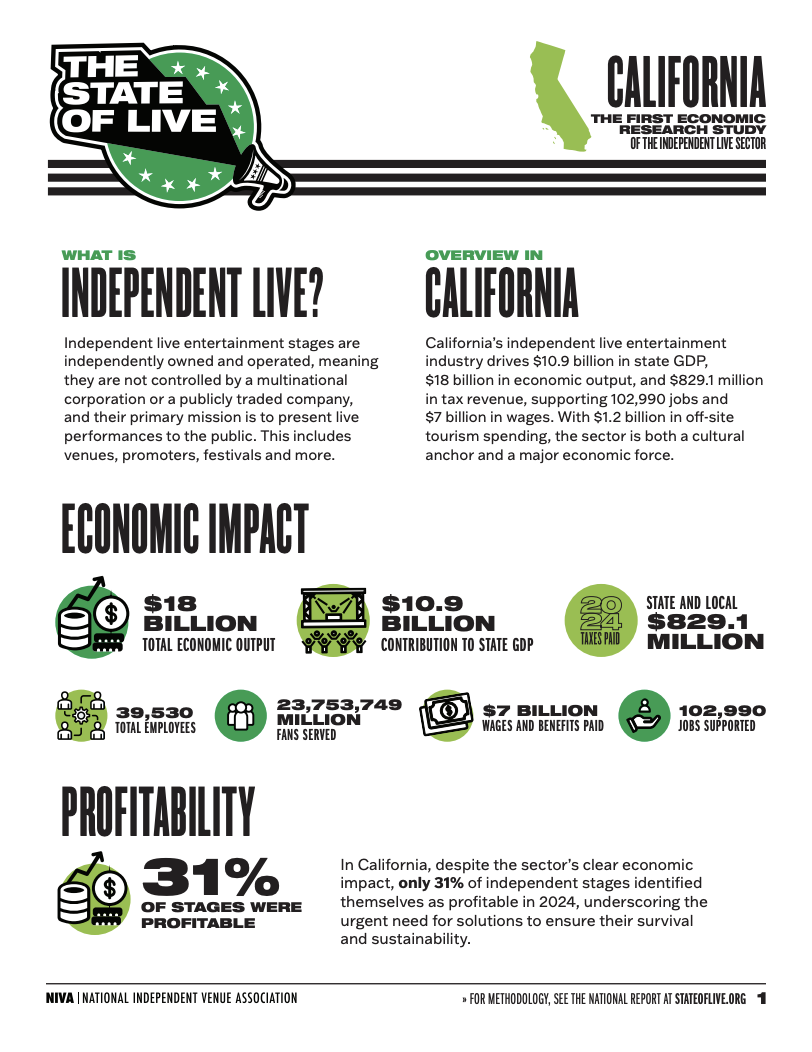 View report at full size
And here's the part that should make every San Franciscan perturbed. The city commissioned Sound Diplomacy to write a comprehensive Music Strategy, completed in early 2020. It was never released. The city has quietly and slowly acted on some of its recommendations, but the public, the venues, and the artists it was written for have never seen the findings or data. You can't build momentum around a report no one is allowed to read.
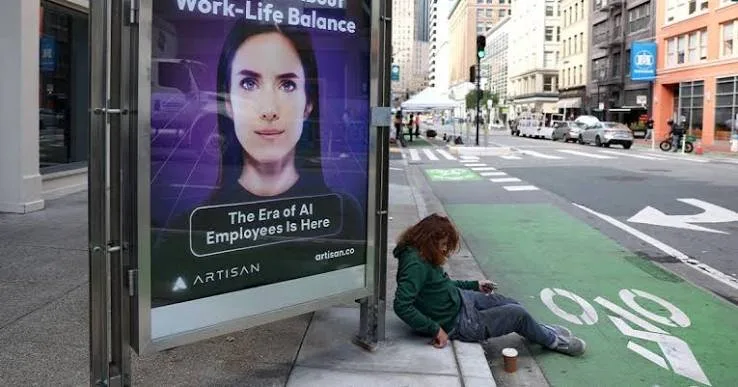
The timing couldn't be worse. San Francisco rents are rising faster than anywhere else in the country, driven by the AI boom. We have seen this movie before. The tech boom of the 2010s brought enormous wealth to a few and hollowed out the conditions that allowed artists to live and work here - the same artists who contributed heavily to the culture that made this such an attractive place to live in the first place. Without a plan, the sequel will go the same way.
There are some positive signs. Long Beach has hired Sound Diplomacy to build an Entertainment Strategic Plan with the 2028 Olympics on the horizon. San Francisco has a State of Live report of its own, released in February with the city's economic development office, a real step, but is limited to independent venues. Sacramento ran a music census in 2022 that shed light on major gaps in the venue landscape and identified key concerns about lack of gig opportunities and regulatory issues, leading to calls for change. However no California city or region has released a comprehensive economic impact study of its entire music ecosystem. One city at a time, siloed, each starting from scratch, is not a strategy.
Remember Georgia's governor deciding a music office wasn't necessary? California's version isn't a veto. It's never even asking the question. It is not even being in the same room. Perhaps it is a "We're so good, robust already, why would we need that?" type of thinking and attitude? If so, that's exactly the swagger without structure that should worry us. If ignorance, that is equally as concerning and puzzling in a place so known for innovation and the cutting edge of culture.
What we should ask for
Imagine what California could do with real structure and planning behind it. Artists could tour easily between regions, from the big metros to the charming secondary and tertiary cities in between, building audiences across the state instead of leaving it. Independent venues could get the support to stabilize and grow instead of closing their doors. More people would gather around live music, more often, in more places. And with all of that come jobs, not just onstage but behind the bar, the board, and the box office, along with the tax revenue, tourism, and lively downtowns that follow. California has one of the largest economies in the world. With intention behind it, it could have one of the greatest music economies, too.
Here's where we could start:
- San Francisco: release the 2020 Music Strategy. It's finished and paid for. Email your Supervisor and the Mayor's office, ask them to publish it, and to commit to a follow up study.
- California: measure the whole music economy. Fund a statewide economic impact study, the kind Texas has run every two years for a decade. On a smaller scale, the Bay Area mega region should have its own regional study given how interconnected it is, and the enormous potential that comes with that.
- California: create a state music office. NIVA's California chapter, under new president Joe Rinaldi, has named this an advocacy priority. Legislators who have already taken on live music issues, like Assemblymember Matt Haney on ticketing reform, are natural allies. City and county offices should follow.
That's only a start, but it is something. We need to get the conversation going and actually get inside the room. Speaking of which, at Calgary Music Cities, out of 200+ delegates I was the only representative from California. In fact i've been to five Sound Diplomacy Conferences over the years now, and am almost always the only representative from CA, and certainly from the Bay Area. How could that be?
Meanwhile, the other remedy is just: "get up and do it yourself". That is part of what led me to create BippityBop. We track every show we can find across 252 and counting Bay Area venues (and Calgary!), and are making efforts to further expand and break that data down into something meaningful. I came away from Calgary jealous of all these regions and cities with economic impact studies, music censuses, and music offices, and although I realize it is likely foolhardy, it made me want to try to get a coalition of orgs together and just conduct our own! So maybe I will, or maybe something else springs out of this - 'when a butterfly flaps its wings' and all that..

California needs a front office
Now bringing it back to my love of basketball, and hey, I would argue that sports are much more musical than you might think. In fact some of my favorite childhood memories involve music + sports with music as the crucial piece (think cassette boombox playing 'Jock Jams' in a bedroom while pretending to dunk or take the game winning shot at the end of the fourth quarter on a plastic door-mounted basketball hoop).
Lacob’s swagger was earned because he built the structure first. The eye-roll response was always that he got lucky: of course you win four titles when you inherit a generational talent like Steph Curry. But plenty of teams have had a superstar and won nothing. Structure is a large part of what turned that luck into titles.
I see California as in the same position. It inherited generational talent and history. Some of the most important artists in the music canon came from here or sang about here and some of the most creative and celebrated music continues to be. California Music has its Steph Curry. Now it needs a front office.
- Brian